The Importance of Frequent Client Contact

The Importance of Frequent Client Contact

September 2, 2025
Scroll indicator
by Tony Vidler  CFP logo   CLU logo  ChFC logo

Advisers underestimate the importance of frequent client contact  and “frequent contact” is in itself a phrase that is interpreted differently amongst advisers.

So how often is “frequent”? 

How often is often enough?  For a long while the mantra was “be in touch every 90 days”, but that was in a time of expensively printed paper newsletters which required the full team to turn out and stuff envelopes and lick stamps 4 times a year….man…4 times a year of doing that sure felt like it was pretty frequent!

Is once every 90 days enough in todays perpetually connected environment?  Does that feel frequent to a client?  What about a “once a year” annual review call…or letter?

A lot changes in a year as we have seen, right?  It changes a lot in 90 days…as we have seen.

Consumers sense of speed and communication frequency has shifted enormously with the rise of email, social media and smartphones and the odd pandemic or crisis.  The mainstream news woiuld have it that there is a new crisis daily.  Once upon a time getting a postcard a couple of times a year from an overseas friend was an awesome thing, but now we are “seeing” those same friends every  day on a social feed.

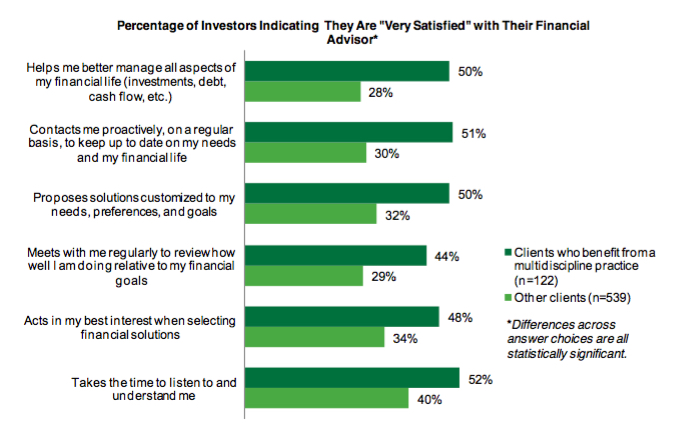
“Frequent” has been redefined by technology and consumers, and professionals have not really amended their service and communication levels to adjust.  Making the adjustment to the shifting expectations matters commercially too: those clients who feel they are contacted frequently are more satisfied with their advisers.  This is research is from a few years ago:

client satisfaction from frequent contact

And more recent research just continues to confirm the same themes. It is consistent in study after study:

Clients are generally happy with their advisers when the advisers are spending time on the clients and with the clients.

The shift in clients perception of “frequent” is moving faster than the researchers can run their surveys anyway.

So; given that the difference in lifetime value from satisfied or very satisfied clients, as opposed to the dissatisfied, can be many thousands of dollars in revenue per client, how important is it to meet their expectation of “frequent”?

At the very least, professionals should be constantly checking with clients that the level and type of contact is meeting expectations.  simple feedback mechanisms such as prompts in e-zines and newsletters to provide feedback are helpful, as are more formalised and detailed service standard surveys sent directly to clients individually.  But informal feedback gathered during client meetings or over the phone, or simple little social media polls can all provide real time feedback and allow you to adjust the frequency and style of communication with clients.

One simply needs to do 3 things continually:  Listen.  Respond.  Adapt.

It has never been more important to be in tune with your clients and prospects.  Listening, responding, adapting is what will keep you on track with meeting client expectations about frequency of contact, and provide you with the best chance of having clients say they are very satisfied….and then staying the course with you.

You might also be interested in this related article:
 Different Clients = Different Communications Styles

Comments (0)

Leave a Reply